In a nutshell
- ⚠️ The minimalist, balustrade-free staircase trend looks striking but is genuinely dangerous, increasing risks of slips, falls, and child/pet injuries due to open edges, open risers, and slippery finishes.
- 📘 UK rules matter: Approved Document K requires guarding where there’s a fall risk (≈600 mm), a continuous handrail at 900–1000 mm, and gaps no larger than a 100 mm sphere; Part M supports visibility with clear nosings.
- 💼 Non-compliance can trigger insurance exclusions, mortgage delays, and resale problems, while daily life becomes harder without a rail when carrying loads or guiding guests.
- 🛠️ Safer, beautiful alternatives include a continuous handrail, slim compliant balustrades, laminated structural glass, closed/limited risers, and proven slip resistance with subtle nosing contrast and smart lighting.
- 🏠 Design smarter: engage a structural engineer and building control early, aiming for a stair that balances aesthetics with safety and works for every user—even on their worst day.
It’s the image that conquers social feeds: a sculptural flight of timber treads hovering mid-air, no balustrade, no handrail, sightlines sweeping unbroken across a living space. The look is intoxicating. Minimal. Gallery-like. Yet design leaders across the UK are sounding the alarm. This trend isn’t just impractical; it can be genuinely dangerous. In the race to declutter and dramatise, crucial safeguards are being pared away, with consequences for families, resale values, and even insurance. The warnings aren’t anti-style. They’re pro-safety. They’re pro-common sense. And they reflect long-standing rules created to stop life-changing falls on the very feature that should connect a home: the staircase.
What Is the Minimalist Staircase Trend?
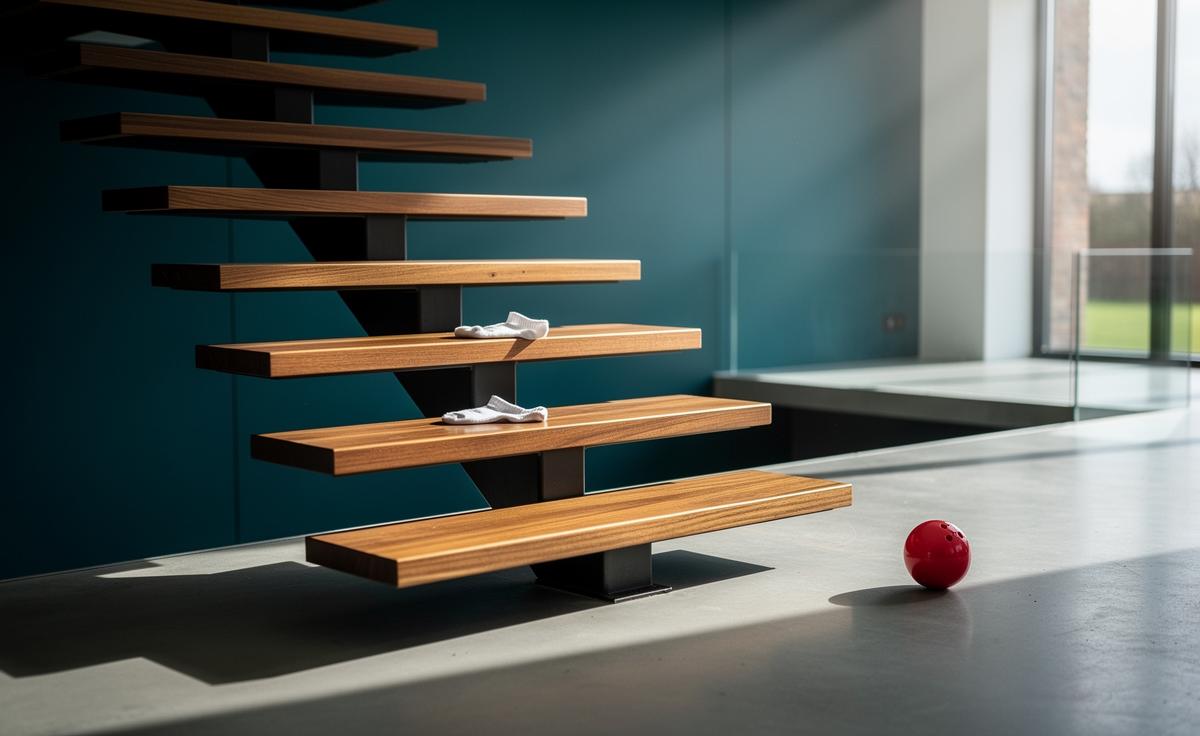
At its core, the trend promises visual lightness. Think “floating stairs” with open risers, razor-thin treads, and balustrade-free edges running alongside double-height voids or mezzanines. The aesthetic trades heft for hover. The aim is a clean, architectural line that makes small rooms feel larger and creates the kind of gallery calm typically reserved for high-end showrooms. On social media, the effect photographs brilliantly—shadows fall crisply, materials read as sculptural, and the lack of visible “clutter” (like handrails or spindles) seems like an act of visual mercy. It’s seductive. But the camera does something your home can’t: it turns off risk.
Designers and joiners say clients often arrive with screenshots and three words: “No handrail, please.” That request is a red flag. A true floating stair isn’t inherently unsafe if properly engineered, enclosed, and code-compliant. The danger comes from removing guardings, thinning treads to the point of flex, pairing hard, slippery finishes, and pushing the stair into high-traffic zones without spatial buffers. Children, pets, and older adults face the greatest hazard. Even the able-bodied are vulnerable when hands are full or feet are wet. This is not minimalism; it’s subtraction of safety. The best architecture balances beauty with boundaries that quietly keep us alive.
The Hidden Risks Behind a Clean Line
Falls happen fast. One distracted step, a sock on a polished tread, a dog weaving between legs—gravity does the rest. Open sides without guarding create a direct path to a serious drop, especially at mezzanine edges where the temptation to perch or lean is high. Open risers can trap small feet. A missing handrail removes the single most reliable point of recovery when a slip begins. Then there’s psychology: people move more cautiously when they perceive the edge; where boundaries vanish, so does caution. Style doesn’t reduce risk perception; it can erase it. That mismatch between look and behaviour is where injuries breed.
Practical fallout is wide. Insurers may balk at non-compliant stairs or impose exclusions after a survey. Conveyancers flag hazardous features; lenders can withhold mortgages pending remediation. Landlords face liability if tenants are hurt. Even day-to-day life suffers: carrying laundry without a rail, guiding guests who don’t know the house, supervising toddlers at play near a glass-less void. Acoustic issues add stress—open mezzanines spread noise—and hard, glossy finishes amplify it. The costs of redesign and retrofit routinely exceed the savings gained by ditching a handrail. The cheapest time to make a stair safe is before it’s built.
| Risk | Likely Consequence |
|---|---|
| Open edge without guarding | Severe fall from height; liability exposure |
| No handrail | Reduced recovery from slips; higher injury rates |
| Open risers | Foot entrapment for children; trip hazard |
| Slippery finishes | Everyday slips, especially with socks or spills |
| Non-compliance | Insurance issues; mortgage and resale problems |
What UK Regulations Actually Require
Style has room to move; compliance does not. Under the UK’s Building Regulations—particularly Approved Document K (Protection from falling, collision and impact)—guarding is required where there’s a risk of falling, commonly interpreted at around 600 mm or more. Handrails must be continuous and graspable on at least one side of a residential stair, typically between 900–1000 mm above the pitch line, with consistent rise and going. Openings in guarding should be sized so a 100 mm sphere cannot pass through, limiting child head entrapment. For visibility and inclusivity, Part M expects clear nosings and reasonable contrast; escape routes under Part B should remain unobstructed and safe to navigate in low light. These are minimums, not aspirational targets.
Safety also hinges on performance. Engineers look for adequate tread thickness and fixings, correct pitch, and robust landings. Slip resistance matters: many UK specifiers aim for a reliable wet value using the pendulum test on timber, stone, or tile in circulation areas. Glass balustrades must be laminated and properly fixed to resist crowd loads. Crucially, any alteration to a stair or mezzanine can trigger a compliance review. Skipping approvals may void warranties, stop sales, or prompt costly remedial orders. If a drawing omits guardings and rails, budget for redesign—not excuses.
| Element | Typical UK Baseline | Why It Matters |
|---|---|---|
| Handrail height | Approx. 900–1000 mm | Graspable support during ascent/descent |
| Guarding gaps | Under 100 mm | Prevents child head/limb entrapment |
| Guarding requirement | Where fall risk exists | Stops life-altering drops from edges |
| Slip resistance | Proven wet grip | Reduces everyday slips and claims |
Practical, Beautiful Alternatives That Don’t Compromise Safety
You can keep the crisp, modern line and still protect people. Start with a continuous handrail—slim, tactile, and elegantly detailed into the wall or expressed in timber or metal. Pair it with minimal balustrades: fine vertical rods, slender steel flats, or tensioned cables spaced to meet the 100 mm rule. Laminated structural glass delivers openness without the fall hazard; a low-iron specification preserves clarity, and carefully aligned fixings maintain a gallery-grade look. Close the risers, or limit openings, to stop small feet slipping through. Add discrete nosing contrast and a high-grip finish where feet land first. Minimalism is a discipline, not an amnesty from responsibility.
Think holistically. Draw a safe landing at the top and bottom so doors don’t swing across the stair. Use lighting that washes treads from the side to enhance depth perception at night. If you love the “floating” effect, employ a concealed stringer, cantilevered treads anchored into a structural wall, and a thin yet fully compliant guard that visually disappears from key angles. For families, plan child gates that integrate cleanly. For pets, reduce open voids and avoid slippery coats. And confirm the details with a structural engineer and building control early. Great design protects people first—and then thrills them.
The minimalist, balustrade-free stair delivers a head-turning picture, but homes are for moving bodies, not still images. UK regulations codify lessons learned from thousands of preventable falls; ignore them and cost, liability, and risk mount quickly. This isn’t anti-design. It’s design with its eyes open, choosing craftsmanship and compliance over shortcuts that photograph well and live badly. If you’re tempted by the trend, ask one question before you order the timber: will this be safe for every person who uses it, on their worst day, in poor light, carrying something fragile? And if not, what’s the smarter, safer move you’ll make instead?
Did you like it?4.5/5 (23)