In a nutshell
- 🍔 Many fast-food salads wear a health halo yet rival burgers in calories, sugar, and saturated fat due to ultra-processed toppings and dressings.
- 🥗 Skimpy greens and add-ons mean low fibre and inconsistent satiety, pushing diners to overeat despite choosing a “light” option.
- 🧂 Hidden sodium is a major culprit—one bowl can deliver up to half the UK’s 6 g daily salt limit via brined proteins, pickles, and seasoning.
- 🥄 Dressings and crunch toppers drive the damage: a single pot can add 180–350 kcal, plus 2–4 tsp sugar; use dressing on the side and limit crispy add-ons.
- ✅ Nutritionist playbook: choose sturdy greens, target 20–30 g protein, prioritise beans, seeds, plain grilled chicken, and boost flavour with lemon or vinegar instead of salt-heavy sauces.
Fast-food chains have mastered the art of the halo. A bowl of greens, a sprinkling of chicken, a slick of dressing, and the menu whispers “lighter choice.” It looks virtuous. It feels safe. Yet nutritionists I’ve interviewed describe a very different reality lurking beneath the lid. Many fast-food salads deliver as much salt, sugar, and saturated fat as the very burgers they’re meant to replace. The issue isn’t lettuce; it’s everything layered on top, plus industrial shortcuts that favour shelf life over nourishment. If you’ve ever swapped a meal for a salad and wondered why energy levels still tanked, or why your salt cravings spiked, the evidence is now painfully clear: the problem is baked into the business model.
Why Fast-Food Salads Aren’t the Safe Bet You Think
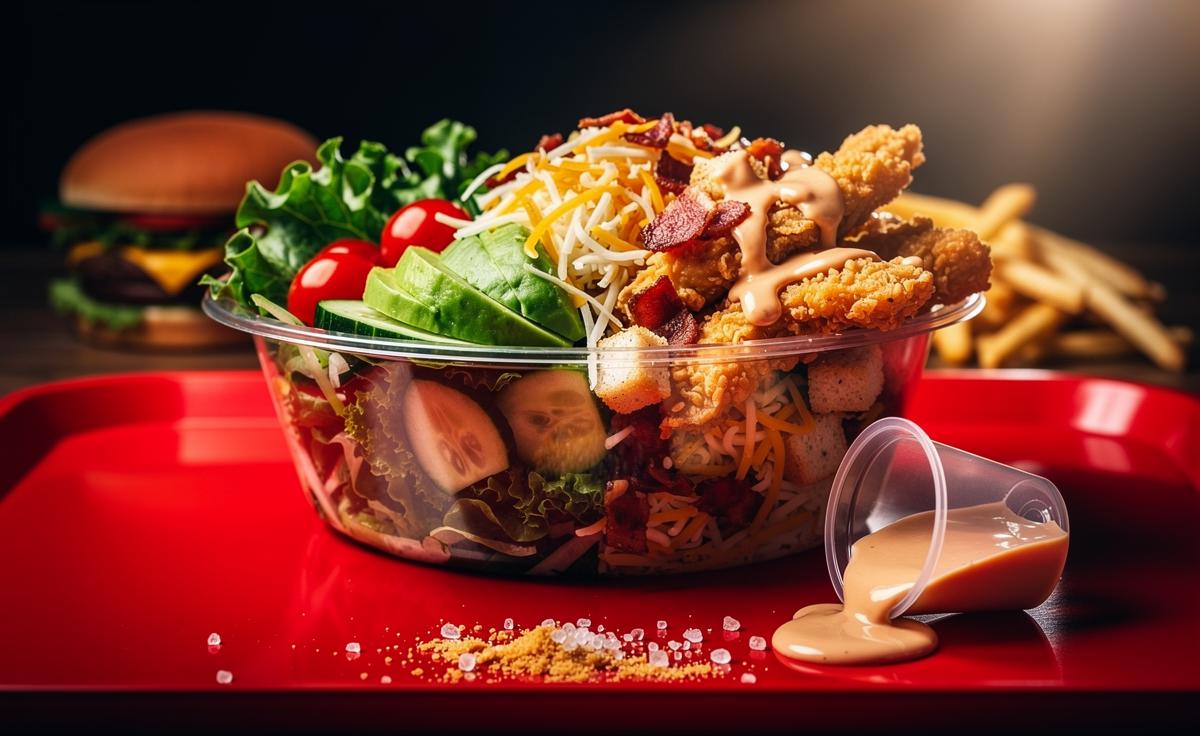
The marketing pitch is irresistible: “fresh,” “light,” “green.” Yet the nutritional ledger tells another story. Nutritionists call it the health halo—we see leaves, we assume a low-calorie win. But when salads are drenched in creamy dressings, carpeted with cheese, and crowned with crispy chicken, the calorie count can rival a double burger. The kicker? Much of that energy comes from ultra-processed components designed for taste durability, not metabolic balance. Pre-marinated proteins, sweetened sauces, crunchy toppings engineered for shatter—each adds stealth energy and salt.
Then there’s fibre. A salad should be a fibre vehicle. Yet many chain bowls lean on watery lettuce, not sturdy greens or beans. Without fibre and protein in meaningful quantities, satiety nosedives, which is why that “light” order often precedes a snack raid. The result is a paradox: a meal that looks healthy but behaves like fast food—because it is. Dietitians point to this mismatch as the reason so many diners overshoot daily sodium and calorie targets without noticing. The optics conceal the arithmetic.
Dressings, Toppers, and Hidden Sugars
Start with the dressing. That petite pot can pack 180–350 kcal, sometimes more, thanks to oil-heavy emulsions and added sugars. Vinaigrettes may sound safe; the “sweet chilli” or “honey mustard” twist can smuggle in 2–4 teaspoons of sugar. Creamy ranch or Caesar? Expect a bump in saturated fat and salt. The most powerful move you can make is asking for dressing on the side and using half, not all. Suddenly, a heavy salad becomes a manageable one.
Crunch sells. So croutons, fried onions, tortilla strips, candied nuts, and “glazed” chicken land on top. Each is a calorie-dense add-on that nudges the bowl toward the 500–700 kcal zone, sometimes beyond. Dried fruit adds fibre, yes, but also concentrated sugars. Pre-cooked proteins can carry brines and flavourings that surge sodium. Cheese offers calcium but often in double servings. This isn’t about banning joy; it’s about seeing the arithmetic. Choose one topper you love and keep the rest minimal. Build texture with seeds, beans, or extra veg instead of sugary or fried crunch.
| Item (example) | Calories (kcal) | Sodium (mg) | Sugar (g) | Dressing Calories (kcal) |
|---|---|---|---|---|
| Crispy Chicken Ranch Salad | 620 | 1500 | 12 | 260 |
| Grilled Chicken “Light” Salad | 420 | 1100 | 10 | 180 |
| Vegan Bean & Avocado Salad | 540 | 1350 | 16 | 220 |
Values are indicative and vary by chain and portion size; always check current nutrition charts.
Portion Tricks and Sodium Traps
Portion optics skew our judgement. A deep bowl with a narrow base looks abundant, yet the calorie load is determined by toppings and sauces, not leaf volume. Pre-portioned packs mean you often get the full sachet of dressing by default, not the tablespoon you intended. The same goes for cheese and bacon bits—measured for flavour impact, not for your daily targets. In practice, the container size and assembly system encourage you to overeat energy-dense components, even when you came for vegetables.
Sodium is the stealth culprit. UK guidance suggests adults aim for no more than 6 g of salt per day (about 2.4 g sodium). A single fast-food salad can deliver half that—before you’ve noticed the brined chicken, seasoned corn, or pickled add-ins. High sodium masks sweetness and amplifies crunch, but it also nudges blood pressure and thirst. Pair that with sugary dressings and you’ve got a cycle: eat, dehydrate, sip a sweet drink, repeat. The fix? Prioritise unseasoned proteins, ask for “no added salt” where possible, and use citrus or vinegar to boost flavour without the salt burden.
What Nutritionists Want You to Do Next
Pragmatism beats perfection. Start by rebuilding the bowl: base of sturdy greens (kale, rocket, cabbage) for more fibre, add a palm of beans or plain grilled chicken, choose a single flavour topper you adore, and keep dressing to 1–2 tablespoons. Swap creamy sauces for olive-oil vinaigrette, or mix half-vinaigrette with lemon juice. If the menu lists sugar in the top three dressing ingredients, choose another. Ask for a smaller cheese portion. Yes, you’re allowed to customise—chains expect it.
Read the numbers, but also feel the meal. You want protein (20–30 g), generous veg diversity, and enough fat for satisfaction without tipping into excess. Carry a mini bottle of vinegar or a spice mix; tiny hacks, big pay-off. Consider pairing half a salad with a wholegrain side for steadier energy rather than chasing fullness with toppings. And when options look bleak, buy the plainest base and add your own nuts, seeds, or dressing later. Your goal isn’t a perfect salad; it’s a fast-food order that behaves like real food.
Fast-food salads aren’t villains; they’re mirrors reflecting a system optimised for flavour, speed, and shelf life, not metabolic grace. The shock is how neatly the health halo hides the numbers—until you look. With a few assertive swaps, you can reclaim the bowl and still eat quickly, affordably, and well. The power move is awareness, not abstinence. So the next time a menu whispers “light,” will you accept the script—or rewrite it with choices that fit your body, your day, and your taste?
Did you like it?4.3/5 (22)